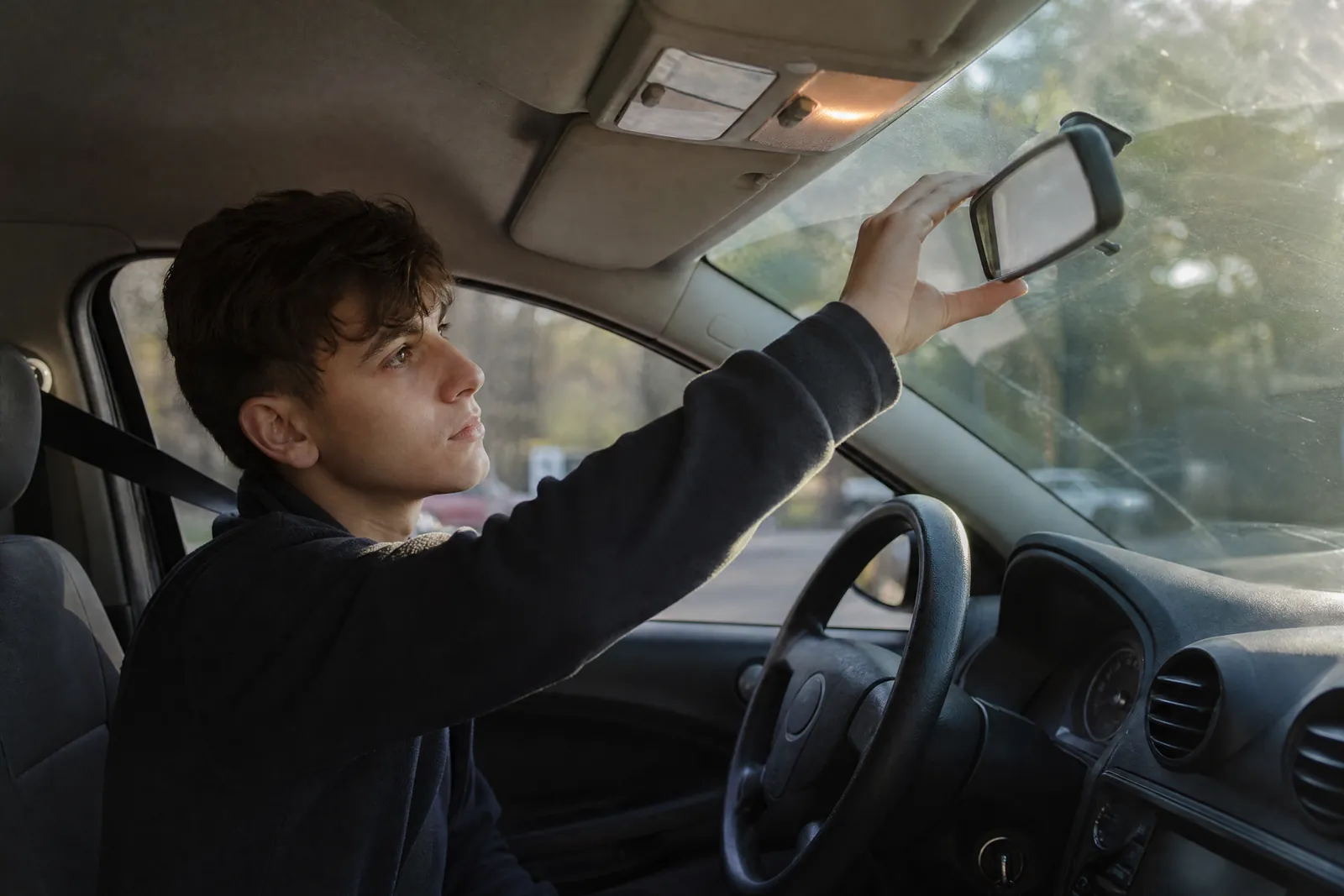
Driver health
- Your physical and mental health can have an effect on how safely you drive.
Vision
- A driver needs good enough vision to spot hazards under various lighting conditions, estimate distances, keep up with the speed of traffic, and read road signs.
Hearing
- A driver needs to be able to hear warning sounds such as horns, sirens, motorcycles, or screeching tires that can signal a hazard.
- Wearing a headset or earplugs in both ears while driving is against the law.
Fatigue and drowsiness
- Being tired or drowsy can harm your vision and make you slower to react to hazards.
Physical and mental alertness
- Drivers must stay alert so they can quickly choose the right action in any traffic situation, including surprising ones.
Medications
- Both prescription and over-the-counter medicines can make you an unsafe driver, and some of them can cause sleepiness.
- You are responsible for knowing how any medication you take affects you.
Vehicle control
- Keeping both hands on the steering wheel whenever you can is critical for controlling your vehicle.
Push/pull steering
- With hand-to-hand (push/pull) steering, your hands should never cross over the center of the steering wheel.
- With hand-to-hand (push/pull) steering, your hands stay in their starting positions even while turning.
- When using the hand-to-hand (push/pull) steering technique, place your hands either at 9 and 3 o'clock or at 8 and 4 o'clock to start.
Hand-over-hand steering
- Hand-over-hand steering is used for turning at low speeds, parking, or recovering from a skid.
- Hand-over-hand steering starts with your hands at the 8 and 4 o'clock positions.
- In hand-over-hand steering, one hand reaches across the wheel to grab the opposite side while the other hand releases the wheel.
- To finish a hand-over-hand move, the free hand reaches across the arm that is still holding the wheel, grips the wheel, and pulls up.
One-hand steering
- Only two situations may call for steering with one hand: turning while backing up, and operating vehicle controls that require taking a hand off the wheel.
- When turning while backing up so you can see behind you, place your one hand at the 12 o'clock position on the wheel.
Signaling
- You may signal either with your vehicle's signal lights or with hand-and-arm signals.
- Signal before every lane change.
- Signal before you pull over to the curb and before you pull away from it.
- You should signal even if you don't see any other vehicles nearby.
- Turn your signal off once you no longer need it.
- Every time you make a turn, move into another lane, reduce speed, or come to a stop, you are required to give a signal.
Hand signals
- Use hand-and-arm signals if your signal lights don't work or if bright sunlight makes them hard to see.
- There are three hand-and-arm signals for drivers: left turn, right turn, and slow or stop.
Bicyclist signals
- A bicyclist may signal a turn by holding an arm straight out, pointing toward the direction of the turn.
Signaling distances
- Signal at least 100 feet before you make a turn.
- On a freeway, signal at least five seconds before changing lanes.
Horn use
- Use your horn to help avoid collisions.
- On narrow mountain roads where you can't see at least 200 feet ahead, use your horn to alert oncoming traffic.
- Your horn is used to let other drivers know you are there or to warn them of a hazard.
Headlights
- Headlights help you see ahead and make your vehicle more visible to other drivers.
- Driving with only your parking lights on is illegal.
High beams
- Switch from high beams to low beams when you are within 500 feet of an oncoming vehicle.
- Switch from high beams to low beams when you are within 300 feet of a vehicle you are following.
Headlight requirements
- Use your headlights whenever it is too dark to see 1,000 feet ahead.
- Headlights must be used starting 30 minutes after sunset and until 30 minutes before sunrise.
- Use headlights when clouds, dust, smoke, fog, or similar conditions keep you from seeing other vehicles.
- Use headlights on mountain roads and in tunnels, even on sunny days.
- Turn on your headlights when a road sign says they must be on.
- Use headlights to make your vehicle easier to see, especially when the sun is low in the sky.
- Use headlights in bad weather; if fog, rain, or snow requires you to use windshield wipers, you must turn on your low-beam headlights.
Warning drivers behind
- Tapping your brake pedal lightly three or four times can warn drivers behind you of a hazard ahead.
- Using a hand signal while slowing and stopping is another way to warn drivers behind you of a hazard.
- If you see a collision or hazard ahead, warn drivers behind you by turning on your emergency flashers.
Vehicle trouble
- If you can't get fully off the road, stop in a spot where people behind you can see you and your vehicle.
- After a breakdown, call for emergency roadside assistance and remain in your vehicle until help comes.
- If you must stop because of vehicle trouble, turn on your emergency flashers, or use your turn signals if the vehicle has no flashers.
- When your vehicle has trouble, pull off the road away from all traffic if you can.
- Don't stop right over a hill or right around a curve, because other drivers might not see your vehicle in time to avoid hitting it.
Communicating with others
- Your signals, horn, and headlights are key tools for communicating with other drivers, pedestrians, and bicyclists.
Restated from the California Driver's Handbook, Section 5. Read the official text.
Check yourself on this section
- Should you signal a lane change if no other vehicles are around?
- How can being tired or drowsy affect your driving?
- You should use your headlights whenever it is too dark to see how far ahead?
- You are required to signal when you:
- Hand-over-hand steering is used for:
- When changing lanes on a freeway, you should signal at least:
- On a sunny day, when must you still use your headlights?
- If you see a collision or hazard ahead, how can you warn drivers behind you?
- Headlights must be on during which period?
- When turning while backing up, where should you place your one hand on the steering wheel?
- Which statement about medications and driving is true?
- Which is true about wearing a headset or earplugs while driving?