Red lights
- A solid red signal light means you must stop.
- You may turn right on a solid red light only if no NO TURN ON RED sign is posted, you first stop at the stop or limit line, you yield to pedestrians, and it is safe to turn.
Red arrows
- A red arrow means stop, and you may not turn while it is showing.
- At a red arrow, stay stopped until a green signal light or a green arrow comes on.
Flashing red light
- A flashing red signal light means stop; once you have stopped, you may go when it is safe.
Yellow lights
- A solid yellow signal light means caution because the light is about to change to red.
- At a solid yellow light, stop if you can do it safely; if you cannot stop safely, carefully go through the intersection.
Yellow arrows
- A yellow arrow means the protected turning period is ending and the signal will change soon.
- At a yellow arrow, if you cannot stop safely or are already in the intersection, carefully finish your turn.
- After a yellow arrow, watch the next signal, which could be a green light, a red light, or a red arrow.
Flashing yellow light
- A flashing yellow signal light warns you to proceed with caution; slow down and stay alert, but you are not required to stop.
Flashing yellow arrow
- At a flashing yellow arrow, turn left only after yielding to oncoming traffic, and do so with caution.
- A flashing yellow arrow means you may turn, but your turn is not protected from other traffic.
Green lights
- On a green light, go only if you have enough room to do so without endangering oncoming vehicles, bicyclists, or pedestrians.
- Do not enter an intersection on green if you cannot make it all the way across before the light turns red.
- A solid green signal light means go, but you must still stop for any vehicle, bicyclist, or pedestrian already in the intersection.
Green arrows
- When you have a green arrow, oncoming vehicles are being held by a red signal light.
- A green arrow means go in the direction the arrow points, and it gives you a protected turn.
Pedestrian signals
- A WALK or walking person signal means pedestrians may cross the street.
- A Don't Walk or raised hand signal means pedestrians may not cross the street.
- Drivers must yield to pedestrians even when the Don't Walk light is flashing.
- Countdown numbers on a pedestrian signal show how many seconds remain to cross the street.
- Diagonal or crisscross crosswalks let pedestrians cross an intersection in any direction at the same moment, but only when the walk signal permits.
- A pedestrian push button is used to turn on the WALK or walking person signal.
- Where there are no pedestrian signals, pedestrians must follow the vehicle traffic signals.
- A flashing Don't Walk or flashing raised hand means pedestrians should not begin crossing because the signal is about to change.
- Beeping, chirping, or spoken messages at crossings help blind or visually impaired pedestrians cross the street.
Warning signs
- You must obey every warning sign no matter what shape or color it is.
- Some warning signs alert drivers to pedestrians, bicyclists, schools, playgrounds, school buses, and areas where school passengers are loaded.
STOP signs
- At a STOP sign, come to a complete stop at the limit line or before the crosswalk.
- After stopping at a STOP sign, look for traffic in every direction before going.
- If there is no limit line or crosswalk at a STOP sign, stop before you enter the intersection.
YIELD signs
- At a red YIELD sign, slow down and be prepared to stop so any vehicle, bicyclist, or pedestrian can go by before you continue.
Regulatory signs
- Red and white regulatory signs give instructions you must follow; for example, DO NOT ENTER means you may not go onto the road or ramp where it is posted.
WRONG WAY signs
- If you find yourself going the wrong way, back out or turn around when it is safe.
- At night, road reflectors that glow red in your headlights mean you are driving the wrong way.
- DO NOT ENTER and WRONG WAY signs may be posted where you would be entering a road against traffic.
Prohibition signs
- A sign with a red circle and a red slash shows a picture of something you are not allowed to do, sometimes with words.
Railroad crossing signs
- A yellow and black round sign or an X-shaped sign means a railroad crossing is ahead.
- When approaching a railroad crossing, look, listen, slow down, get ready to stop, and let any trains go by before you continue.
- At many rail crossings, a blue-and-white sign tells you what steps to take if an emergency happens on or close to the tracks, or if your car stops working while on them.
Sign shapes
- A diamond-shaped sign warns of particular road conditions and hazards ahead.
- A white rectangular sign tells you important rules that you must obey.
Right-of-way basics
- Right-of-way rules decide who goes first when vehicles, bicyclists, and pedestrians meet on the road.
- Never count on other drivers to give you the right-of-way.
- Give up your right-of-way whenever doing so will help avoid a collision.
- The vehicle that reaches the intersection first has the right-of-way, and others must wait for it.
Intersections
- An intersection is any spot where one road meets another.
- Pedestrians always have the right-of-way.
- At an intersection with stop signs on all four corners, stop first, then follow the first-to-arrive and yield-to-the-right rules.
- On a green light, proceed carefully because pedestrians have the right-of-way.
- Before entering an intersection, look left, right, and ahead for vehicles, bicyclists, and pedestrians, and be ready to slow or stop.
- At an intersection without STOP or YIELD signs, the vehicle that gets there first has the right-of-way.
- If a vehicle, pedestrian, or bicyclist reaches the intersection at the same time as you, yield to the one on your right.
- An intersection is controlled if it has signs or traffic signal lights, while uncontrolled and blind intersections have no signs or signals.
Turning at intersections
- When turning left, look for pedestrians and yield to any pedestrian or approaching vehicle close enough to be a danger.
- When turning right, always check for pedestrians crossing and for motorcycles and bicycles traveling beside you.
Entering traffic
- When entering traffic, go carefully and yield to vehicles already in the lanes.
Blocking intersections
- It is illegal to stop in or block an intersection when there is not enough room to fully cross before the signal turns red.
Roundabouts
- In a roundabout, all traffic moves in one direction around a center island.
- Slow down as you approach a roundabout and yield to all traffic already inside it.
- In a roundabout, follow the signs and lane markings that guide you.
- Drive counter-clockwise in a roundabout, and do not stop or pass while in it.
- Use your signal when changing lanes or exiting a roundabout.
- If you miss your exit in a roundabout, keep circling until you come back to it.
- Enter a roundabout by heading to the right when there is a gap large enough to merge safely.
Multi-lane roundabouts
- In a roundabout with more than one lane, pick your entry and exit lane based on where you are going.
- To turn right in a multi-lane roundabout, use the right lane to enter and exit in the right lane.
- To go straight in a multi-lane roundabout, you may use either lane, and you exit in the same lane you entered.
- To turn left in a multi-lane roundabout, enter and keep going around until you reach the exit for the direction you want.
Pedestrians
- Even though pedestrians have the right-of-way, they still must obey the rules of the road.
- When a pedestrian is crossing the road, whether or not there is a crosswalk, you must be careful, slow down, or stop so they can finish crossing safely.
- Do not pass a vehicle that is stopped at a crosswalk, because a pedestrian you cannot see may be crossing.
- A pedestrian who makes eye contact with you is ready to cross, so yield to them.
- Always give pedestrians enough time to cross, since seniors, people with small children, and people with disabilities may need more time.
Crosswalks
- A crosswalk is the section of road reserved for pedestrians to cross safely.
- Pedestrians have the right-of-way in both marked and unmarked crosswalks.
- If there is a limit line before a crosswalk, stop at the limit line and let pedestrians cross.
- At crosswalks with flashing lights, watch for pedestrians and be ready to stop whether or not the lights are flashing.
- White lines commonly mark crosswalks, though school crossings may use yellow lines, and some crosswalks have no markings.
Blind pedestrians
- Take extra care when turning or backing up near blind pedestrians, especially in a hybrid or electric vehicle, since they depend on sound to know a vehicle is near.
- Pedestrians using a guide dog or white cane, who are partly or fully blind, have the right-of-way at all times.
- Do not stop in the middle of a crosswalk, because it could make a blind pedestrian walk into traffic outside the crosswalk.
- Do not honk your horn at a blind person.
- When a blind person pulls in their cane and steps back from the intersection, it usually means you may go.
Traffic control
- When you are at or nearing traffic signs or signals, give way to pedestrians, bicyclists, and nearby vehicles that may have the right-of-way.
Broken traffic lights
- If a traffic light is not working, stop as though there were STOP signs facing every direction, then go carefully when it is safe.
Pedestrians defined
- Pedestrians, also called vulnerable road users, include people walking and people traveling on something other than a vehicle or bicycle, such as roller skates or a skateboard.
- Someone with a disability who travels by tricycle, quadricycle, or wheelchair counts as a pedestrian.
Mountain roads
- On a steep narrow road, the vehicle facing downhill should back up until the uphill vehicle can get by, because it has more control when backing up the hill.
- If two vehicles meet on a steep, narrow road and there is no room for either to get by, the one pointed uphill has the right-of-way.
School signs
- A sign with five sides signals that a school is nearby, so reduce your speed and stop for any children in the crosswalk.
T intersections
- Where a T intersection has no STOP or YIELD signs, anyone traveling on the through road (the road going straight) has the right-of-way, whether they are in a vehicle, on a bicycle, or walking.
Truck blind spots
- Large vehicles and trucks have big blind spots, called No Zones, where a car can vanish from the truck driver's sight.
- If you are unable to see a truck's side mirrors, the truck driver is unable to see you.
- Truck drivers see well ahead of them and have larger mirrors, but they still have large blind spots.
Truck braking
- Large vehicles and commercial trucks need more distance to stop than passenger vehicles going the same speed, so they keep extra room ahead of them.
- At 55 mph, an average passenger vehicle can stop within 300 feet, while a large vehicle may need up to 400 feet.
- Heavier and faster vehicles need more distance to stop safely, so a loaded truck stops more slowly than an empty one.
- Never cut in front of a large vehicle and then suddenly slow down or stop, because it cannot stop quickly enough to avoid hitting you.
Truck turning
- When turning, a vehicle's rear wheels travel a shorter path than its front wheels, and this difference grows as the vehicle gets longer.
- Large vehicles and trucks often have to swing wide to finish a turn.
- Before passing a large vehicle you are following, check its turn signals, since it may look like it is turning one way while actually swinging wide the other way to turn.
Truck maneuvering
- Do not change lanes right in front of a large vehicle or truck to get to an exit or make a turn.
- Do not stay beside a large vehicle longer than needed, because driving alongside makes it hard for its driver to avoid road dangers.
- Always pass a large vehicle on its left side, and after passing, move ahead of it.
- Do not tailgate large vehicles; following too closely reduces the safety distance.
- Do not underestimate a large vehicle's size and speed, since they often seem to be moving slower than they are.
- On a divided highway with four or more lanes in one direction, large vehicles and trucks may use the two right-most lanes.
Bus and streetcar safety zones
- You must never drive through a safety zone, under any circumstances.
- Safety zones may be marked with dotted white lines.
- Safety zones are areas reserved for pedestrians waiting for buses, streetcars, and trolleys, marked by raised buttons or markers on the road.
- You may pass a bus, streetcar, or trolley stopped at a safety zone or traffic light at a speed no higher than 10 mph.
Passing streetcars
- You may pass a streetcar or light rail vehicle on the left if the tracks are too close to the right side for you to pass on the right.
- You may pass a streetcar or light rail vehicle on the left when you are on a one-way street or when a traffic officer tells you to.
- Do not pass a light rail vehicle or streetcar on its left side, whether it is moving or stopped, except in certain situations.
Light rail vehicles
- Know where light rail vehicles run; buildings, trees, and other objects can create blind spots for the operator.
- Never turn in front of a light rail vehicle that is approaching, and keep a safe distance from them.
- Look for approaching light rail vehicles before turning across tracks, and finish the turn only when the traffic light allows it.
- Light rail vehicles can interrupt traffic lights.
- When operating on public streets, light rail vehicles carry the same legal rights and duties as any other vehicle.
Motorcycles
- Check your mirrors and look for motorcycles when changing lanes or entering a road, because their small size lets them hide in blind spots.
- Keep a following distance of at least three seconds behind a motorcycle in case the rider brakes suddenly or falls.
- When possible, let a motorcycle use the entire lane.
- Lane splitting, where motorcycles share lanes with other vehicles, is legal.
- Never attempt to pass a motorcycle within the same lane.
- Look for motorcyclists before opening a door on the traffic side.
- When you can, shift to one side of your lane so motorcyclists have more room to pass.
- Road conditions may make motorcyclists suddenly change their speed or direction.
- Motorcyclists have the same rights and responsibilities as drivers of other vehicles.
Emergency vehicles
- You may get a ticket for failing to pull over for an emergency vehicle.
- When approaching a stopped emergency vehicle with flashing hazard lights, move over and slow down.
- If an emergency vehicle appears while you are in an intersection, keep going through it, then pull to the right when safe and stop.
- You must obey any order, direction, or signal from a law enforcement officer or firefighter, even if it conflicts with signs, signals, or laws.
- It is illegal to follow within 300 feet of a fire engine, police vehicle, ambulance, or other emergency vehicle that has its siren or flashing lights on.
- Driving to the scene of a fire, collision, or other disaster can get you arrested because you interfere with rescue and emergency workers.
- If a police car, fire engine, ambulance, or other emergency vehicle is running its siren and red lights, give it the right-of-way by pulling to the right side of the road and stopping until it has gone by.
Slow-moving vehicles
- Slow-moving vehicles may need more time to reach traffic speed when entering, and large trucks, bicycles, and some cars slow down on long or steep hills.
- An orange and red triangle on the back of a vehicle marks it as slow-moving, such as road maintenance vehicles that usually go 25 mph or less.
- Scooters, neighborhood electric vehicles, and golf carts are slow-moving motorized vehicles that may use public roads, so adjust your speed for them.
NEVs and LSVs
- Signs or markings reading NEV USE ONLY or NEV ROUTE mean you should watch for slow-moving vehicles.
- Neighborhood Electric Vehicles and Low-speed Vehicles have a top speed of 25 mph and are not allowed on roads with speed limits over 35 mph.
Animal-drawn vehicles
- Purposely frightening horses or livestock is against the law.
- Horse-drawn vehicles and people riding horses or other animals may legally share the road with motor vehicles.
Animals near road
- A sign showing an animal means you should watch for animals on or close to the road.
- If animals or livestock are near the road, slow down or stop, continue only when safe, and follow instructions from whoever is in charge of the animals.
Bicyclist rights
- Bicyclists may legally ride on some freeway sections where no alternate route exists and bicycling is not prohibited by law.
- Bicyclists may move left to avoid hazards such as parked or moving vehicles, other bicycles, animals, or trash.
- Bicyclists may use crosswalks by stopping and crossing like a pedestrian.
- Bicyclists have the same rights and responsibilities as other drivers.
- Bicyclists may ride near the left curb or edge on a one-way street.
Bicyclist responsibilities
- Bicyclists must ride in the same direction as traffic.
- Before turning or changing lanes, a bicyclist must look over their shoulder to be sure the lane is clear.
- Bicyclists under 18 years old must wear a helmet.
- Bicyclists must stay visible, for example by never weaving between parked vehicles.
- Bicyclists must not ride on the sidewalk unless the city permits it.
- Bicyclists must use a bike lane whenever possible, or otherwise a through traffic lane.
- A bicycle must have brakes that fully work.
- Bicyclists must make left and right turns the way drivers do, using hand signals and turn lanes.
- People on bicycles are required to follow every traffic sign, signal light, and basic right-of-way rule, and they must let pedestrians go first.
Bicycling at night
- At night, bicyclists should not wear dark clothing.
- At night, a bicycle must have a front lamp giving white light visible from 300 feet.
- At night, a white or yellow reflector visible from 200 feet must be on each pedal, the rider's shoes, or the rider's ankles.
- After dark, a bicycle must be equipped at the back with a built-in red reflector, a steady red light, or a blinking red light that can be seen from 500 feet away.
Bicycles in travel lanes
- A slower bicyclist does not have to stay at the right edge if the lane is too narrow for a bike and a vehicle to travel safely side by side, or when approaching a right turn.
- Drivers should follow bicyclists at a safe distance, and the bicyclist should move over to let vehicles pass when it is safe.
- A bicyclist going slower than traffic must ride as near as possible to the right curb or edge, except when passing a vehicle or bicycle going the same way, preparing a left turn, or avoiding a hazard or road condition.
- On a one-way road with two or more lanes, a bicyclist may ride near the left curb or edge.
Passing bicyclists
- If three feet of clearance is not possible, do not pass the bicyclist until it is.
- Give bicyclists enough room that they are not pushed into parked vehicles or open car doors.
- To pass a bicyclist in the travel lane, you may need to move into another lane, pass safely, and then go back to your original lane, leaving space between you and the rider.
- If you cannot change lanes to pass a bicyclist, leave at least three feet between your vehicle and the bicyclist.
- Check for bicyclists when changing lanes or entering traffic because they may be hidden in blind spots.
- Be cautious when you come up behind or overtake a cyclist on a road with only two lanes.
Bike lanes and turns
- Merge toward the curb or into a bike lane only when it is safe, and merge in behind a bicyclist when getting ready to turn.
- Do not enter a bike lane more than 200 feet before beginning a turn.
Work zones
- Warning signs and message boards alert you to workers, slow equipment, and closed lanes ahead.
- In a work zone, slow down, leave extra space between vehicles, expect sudden slowing or stopping, watch for lane-changing drivers, and avoid distractions.
- Obey special signs and instructions from work zone workers such as flaggers.
- Cones, drums, or other barriers guide traffic through a work zone; merge as soon as it is safe without crossing them.
- In work zones, be ready to slow or stop for highway equipment and watch for bicycles when lanes are narrow or the shoulder is closed.
Work zone fines
- A person convicted of assaulting a highway worker can be fined up to $2,000 and jailed for up to one year.
- Traffic violation fines in a work zone can be $1,000 or more.
Double fine zones
- Some roads are designated Safety Enhanced-Double Fine Zones because of higher collision injuries and deaths, and fines are doubled there.
- When workers are on site in a highway construction or maintenance zone, fines there are twice the normal amount.
Hazardous loads
- Vehicles displaying hazardous load signs must stop before crossing railroad tracks.
- A diamond-shaped sign on a truck means its cargo may be dangerous, such as gas or explosives.
Heavy traffic and weather
- You must drive more slowly in heavy traffic or bad weather, but you should not drive so slowly that you block normal, reasonable traffic flow.
- Driving faster or slower than the speed limit can get you a citation.
- If a driver behind you is close and wants to go faster, move to the right.
- If you choose to go slower than other traffic, use the right lane.
School zones
- All vehicles must stop for school buses.
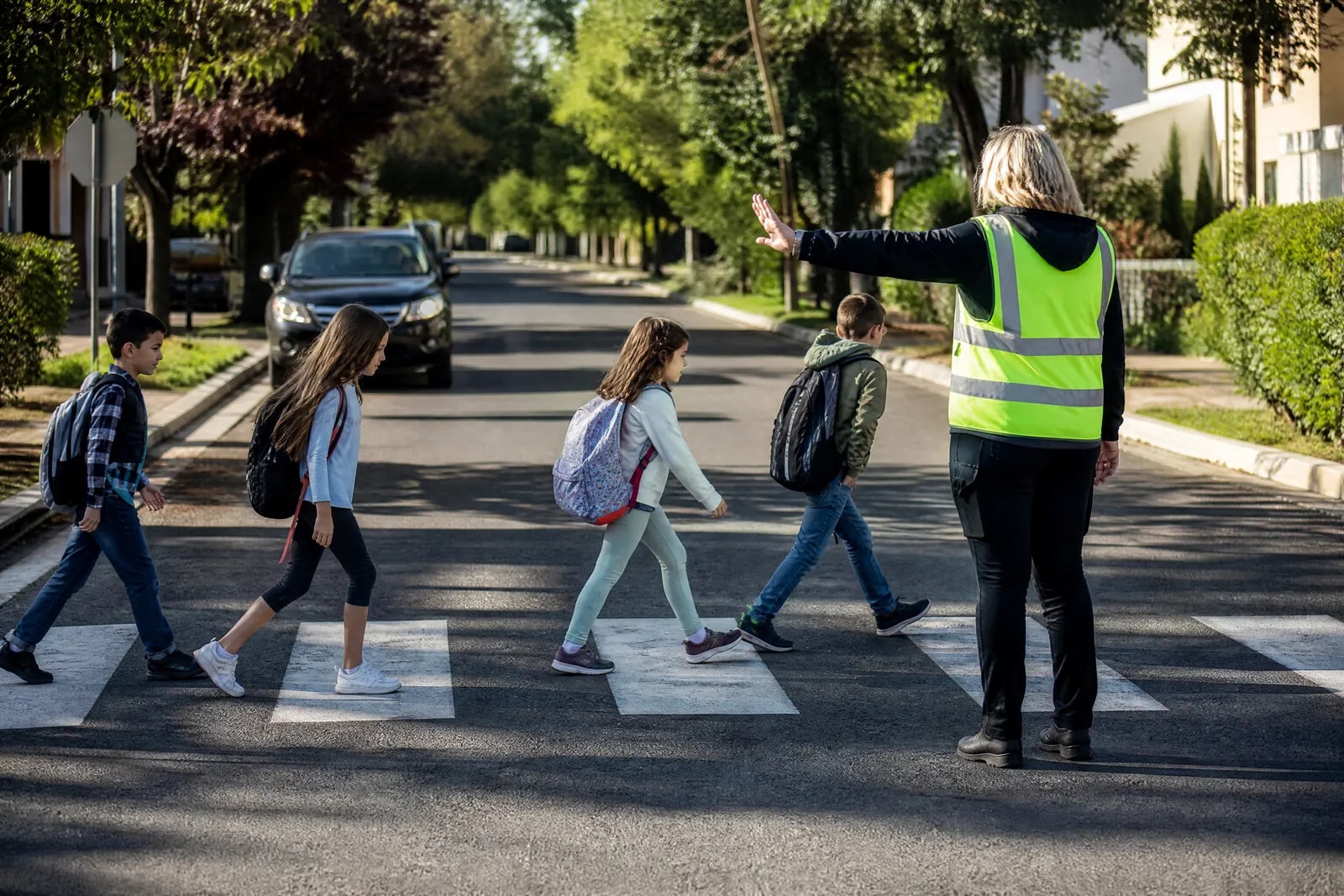
- Near schools, watch for bicyclists, pedestrians, crossing guards or school safety patrols, stopped school buses, and children crossing.
- Always obey the directions of school safety patrols and crossing guards.
- The speed limit within 500 feet of a school is 25 mph while children are outside or crossing the street.
- Some school zones have speed limits as low as 15 mph.
School buses
- Flashing yellow lights on a school bus mean it is getting ready to stop to let children off, so slow down and prepare to stop.
- When a school bus flashes its red lights, you must stop from either direction and stay stopped until the children are safely across and the lights stop flashing.
- Failing to stop for a school bus with flashing red lights can bring a fine of up to $1,000 and a one-year suspension of your driving privilege.
- You do not have to stop for a school bus on the opposite side of a divided or multilane highway with two or more lanes in each direction.
- School bus red lights are located at the top, front, and back of the bus.
Blind intersections
- An intersection is called blind when none of its corners has a stop sign.
- If your view at an intersection is blocked, creep forward slowly until you can see.
- The speed limit at a blind intersection is 15 mph.
Alleys
- An alley is a road 25 feet wide or less used to reach the back or side entrances of buildings or properties.
- You may drive on or across a sidewalk to get into or out of a driveway or alley.
- The speed limit in an alley is 15 mph.
Railroad crossings
- Flashing red lights at a railroad crossing mean stop and wait; do not cross until they stop flashing, even if the gate goes up.
- When crossing devices or a person warn that a train is coming, stop no closer than 15 feet from the nearest track.
- Never drive under gates that are coming down or around gates that are down.
- Many crossings have more than one track, so look both ways and cross only when safe.
- Never stop on railroad tracks; do not start across unless there is enough room to clear the tracks completely.
- Buses, school buses, and vehicles with hazardous materials placards must stop before crossing train tracks, so watch for them.
- You may exceed 15 mph near a railroad crossing if it is controlled by gates, a warning signal, or a flagman.
- If crossing gates are down and no train is coming, call the posted railroad emergency toll-free number or 911.
- At crossings, stop, look, and listen; if you see a train or hear a horn or bell, do not cross.
- Expect a train on any track at any time, coming from either direction.
Business and residential districts
- The speed limit in business or residential districts is 25 mph unless a different limit is posted.
Sharing the road
- The road is shared with other vehicles, pedestrians, bicyclists, road workers, and large vehicles.
Move over law
- Drivers must move over and slow down for stopped emergency vehicles or tow trucks showing flashing amber warning lights.
- Drivers must move over and slow down for stopped road work vehicles showing emergency flashing or amber warning lights.
Towing
- Drivers pulling a trailer or another vehicle, or operating a truck that has three or more axles, are required to stay in the rightmost lane or in a lane designated for slower traffic.
- If you are towing or driving a truck with three or more axles on a road with no marked lanes and at least four lanes going your way, you are limited to the two lanes closest to the right edge.
Smoking with minors
- Smoking is not allowed while a minor is in the vehicle, and doing so can result in a fine.
Vehicle loads
- You may not drive a vehicle loaded so heavily that you cannot control it or cannot see ahead or to its sides.
- Driving with a load that is not secured and creates a safety hazard is prohibited.
- On a passenger vehicle, nothing carried may stick out past the fenders on the left side.
- On a passenger vehicle, nothing carried may stick out more than 6 inches past the fenders on the right side.
- If cargo sticks out more than 4 feet past the rear bumper, it must show a 12-inch square flag that is red or fluorescent orange.
- At night, cargo sticking out more than 4 feet past the rear bumper must be marked with two red lights.
Video monitors
- A video monitor the driver can see is not allowed unless it shows only vehicle information, navigation, a media player, or the radio.
Littering burning items
- Throwing a cigarette, cigar, or anything else that is burning or glowing out of your vehicle is illegal.
Windshield obstructions
- Signs or objects that block your view may not be placed on the front windshield or the side rear windows, and nothing should hang from the mirror.
- An electronic toll payment device may be placed within a 5-inch square at the top center of the windshield.
- Objects may be attached to the side windows located behind the driver.
- An object may be attached within a 7-inch square in the lower corner of the passenger-side windshield or the lower corner of the rear window.
- An object may be attached within a 5-inch square in the lower corner of the driver's side window.
Funeral processions
- Vehicles in a funeral procession have windshield markers identifying them and drive with headlights on.
- Interrupting a funeral procession can get you a ticket.
- Funeral processions, which are headed by a traffic officer, hold the right-of-way, so you must not disrupt them.
License plates
- You may not drive a vehicle whose license plate cannot be read.
- Changing or altering a license plate in any way is prohibited.
Evading law enforcement
- Using a vehicle to flee or try to evade law enforcement doing their duties is a misdemeanor punishable by up to one year in county jail.
- Causing serious bodily injury during a police pursuit can lead to up to seven years in state prison or up to one year in county jail.
- A manslaughter conviction from evading law enforcement in a pursuit carries a state prison term of a minimum of 4 to 10 years.
Unlicensed drivers
- If someone without a license is caught driving your vehicle, the vehicle may be impounded for 30 days.
Reckless driving
- Being convicted of reckless driving or a speed contest that injures another person can bring imprisonment, a fine, or both.
Traffic tickets
- When you are cited for a traffic violation, signing the ticket is your promise to appear in traffic court.
Failure to appear
- If an adult or minor fails to appear (FTA) in court for a traffic ticket, DMV may suspend their driving privilege until they appear.
- Breaking your promise to appear in court causes an FTA to be added to your driver's record.
Driver record points
- An adult's license may be suspended for having 4 points in 12 months.
- An adult's license may be suspended for having 6 points in 24 months.
- An adult's license may be suspended for having 8 points in 36 months.
- The court notifies DMV each time you are convicted of a moving violation, and the conviction is added to your driver's record.
- Convictions reported by other states and by juvenile court are also added to your driver's record.
- Collisions and traffic convictions stay on your driving record for at least 36 months, and possibly longer depending on what kind of conviction it is.
Traffic violator school
- For a one-point violation, a judge may let you attend traffic violator school so the ticket is not reported to your insurance company, though it still stays on your driving record.
- You can choose traffic violator school only once in any 18-month period.
- The traffic violator school reports your completion to the court, and you also receive a completion receipt.
- Commercial drivers cited while driving a noncommercial vehicle should refer to the California Commercial Driver's Handbook.
Suspension and revocation
- A driver with too many points is considered a negligent driver, and DMV may place them on probation or suspend or revoke their driving privilege.
- When DMV takes action against your driving privilege, you have the right to a hearing, and DMV will tell you in writing about the action and your legal rights.
- Courts also have the power to suspend a person's driving privilege.
- If you are convicted of hit-and-run, or of reckless driving that resulted in someone being hurt, DMV will revoke your privilege to drive.
- Once your suspension or revocation period is over, you can apply for a new license, but you need to prove financial responsibility, for example with an SR 22/SR 1P.
Minor provisional license
- If a minor has collisions or traffic violations during the first 12 months of having a license, DMV may restrict or suspend their driving privilege.
- You may not drive while your driving privilege is suspended or revoked.
- DMV may take action against a minor's license after one at-fault collision or one traffic violation conviction; at fault means you were found responsible.
- A minor with two at-fault collisions, two violation convictions, or one of each cannot drive for 30 days unless accompanied by a licensed adult who is at least 25 years old.
- A minor with three at-fault collisions, three violation convictions, or any combination of three will have their driving privilege suspended for six months and be on probation for one year.
- More at-fault collisions or violation convictions while on probation will result in another license suspension.
- Turning 18 does not cancel any restrictions, suspensions, or probation already in place.
Minor alcohol and drugs
- If a person aged 15-20 is convicted of using alcohol, a controlled substance, or both, the court will order DMV to suspend their driving privilege for one year or delay when they can apply for a license.
Administrative hearings
- Administrative hearings about your driving privilege are run by DMV.
- The hearing lets you be heard before action is taken, and any court action for the same reason is separate from DMV's action.
- When you are told DMV plans to act against your driving privilege, you have 10 days from being served, or 14 days from the mailing date of the notice, to ask for a hearing; if you miss that deadline, you give up the hearing.
Hearing rights
- At a DMV hearing you may present relevant evidence and witnesses for yourself.
- You may review the evidence and cross-examine witnesses; since DMV relies only on written documents, you must get a subpoena yourself to question someone who prepared or is named in a document.
- You can speak on your own behalf or have a lawyer or other representative, paid for by you, act for you, though a lawyer is optional.
Animals in trucks
- Animals may only be carried in the back of a pickup or other truck if they are properly secured so they cannot fall, jump, or be thrown out.
Record confidentiality
- Most of your driver's record is public, except your physical or mental conditions, address, and social security number.
- Copies of your driver's record are available through the internet or from a kiosk.
Animal abandonment
- Leaving or dumping an animal on a highway is a crime that can bring up to a $1,000 fine, six months behind bars, or both penalties together.
Truck bed riders
- Passengers are not allowed in the bed of a pickup or any other truck unless that vehicle has secured seating equipped with seat belts.
Unsafe drivers
- If someone you know is no longer a safe driver, you can file a Request for Driver Reexamination (DS 699) so DMV will reassess whether they are qualified to drive.
Restated from the California Driver's Handbook, Section 7. Read the official text.
Check yourself on this section
- If you cannot see a truck's side mirrors, what does that mean?
- After being served notice that DMV plans to act against your driving privilege, how many days do you have to request a hearing?
- While driving at night, road reflectors glow red in your headlights. What does this mean?
- Your light is green, but traffic is backed up past the intersection. What should you do?
- What does a diamond-shaped sign tell you?
- If a person aged 15-20 is convicted of using alcohol or a controlled substance, the court will order DMV to suspend their driving privilege for:
- What is the minimum following distance behind a motorcycle?
- Which is correct when driving in a roundabout?
- If livestock are near the road, you should:
- An adult driver's license may be suspended for having 6 points within:
- A person convicted of assaulting a highway worker can face which penalty?
- Which of the following loads is illegal to drive with?