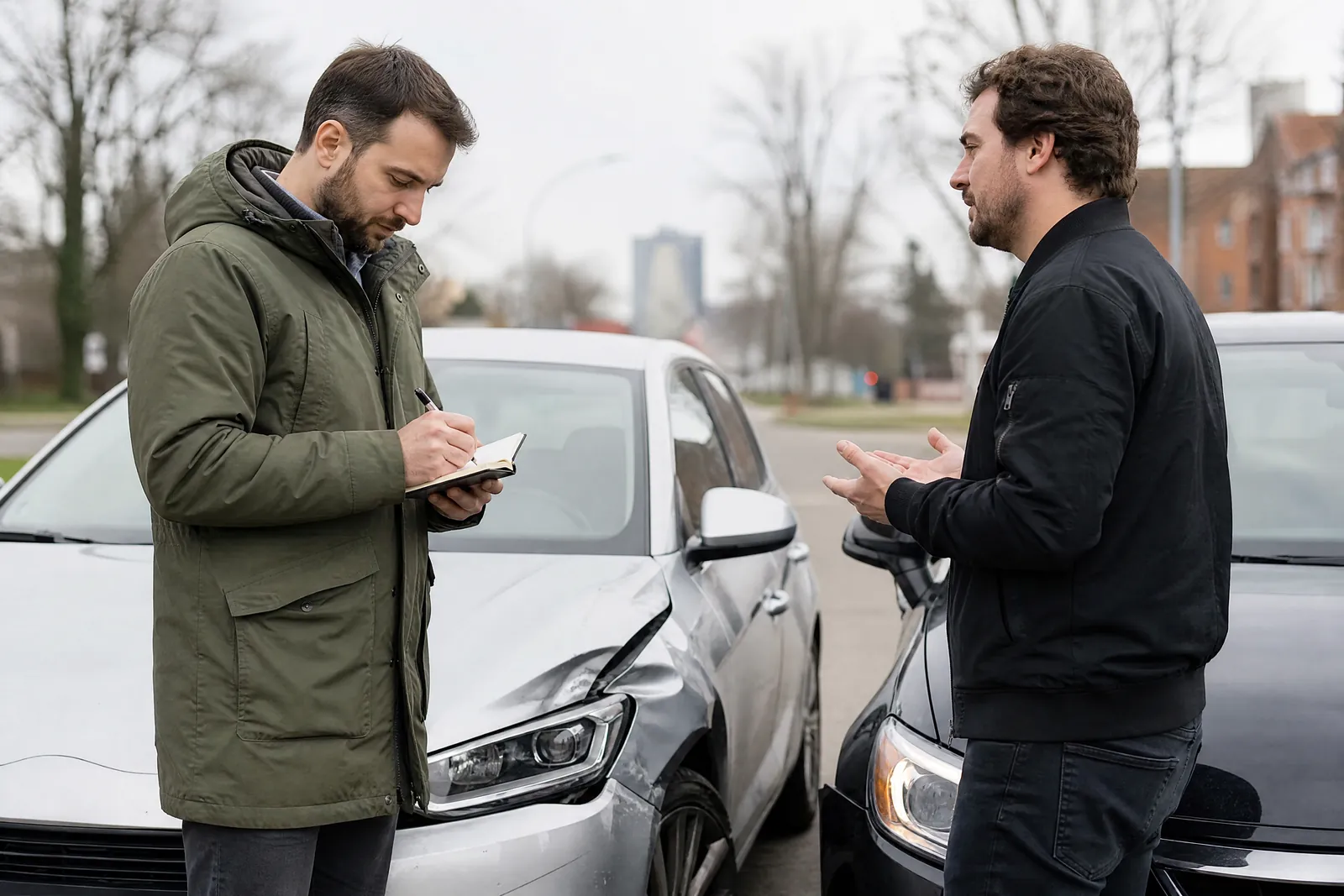
Proof of insurance
- You are required to carry proof of financial responsibility (insurance) whenever you drive and when you take a drive test.
- After a collision, you must show your proof of insurance to the other drivers who were involved.
Insurance minimums
- Your insurance must provide at least $30,000 of coverage for the death or injury of one person.
- Your insurance must provide at least $60,000 of coverage for the death or injury of more than one person.
- Your insurance must provide at least $15,000 of coverage for damage to property.
Financial responsibility minors
- For drivers under 18, the parents or guardians are financially responsible and must pay for damages if the young driver is in a collision.
- Once a driver reaches age 18, that driver is financially responsible for themselves.
Buying insurance
- Before purchasing insurance, check that the agent, broker, or insurance company holds a license from the California Department of Insurance.
Driving without insurance
- If you are in a collision without proper insurance, your driving privilege can be suspended for up to four years.
- The suspension for being uninsured in a collision applies no matter which driver caused the crash.
- You may get your license back during the final three years of the suspension by submitting a California Insurance Proof Certificate (SR 22/SR 1P) and keeping it in effect for that entire three-year period.
Causes of collisions
- Knowing what leads to collisions can help you avoid them.
- Common causes of collisions include driver distractions, unsafe speed, and improper turns.
- Common causes of collisions also include ignoring right-of-way rules and failing to obey stop signals and signs.
- A vehicle moving faster or slower than the surrounding traffic flow is a common cause of collisions.
- Driving on the wrong side of the road is one of the most common causes of collisions.
Emergency flashers ahead
- When you see emergency flashers on a vehicle ahead, slow down because there could be a collision or other emergency, and pass with care.
Avoiding collision scenes
- Stay away from collision scenes when you can, because injured people get help sooner when the road is not blocked by other vehicles.
After a collision
- If you are involved in a collision, you are required to stop, since someone may be hurt and need help.
- If anyone is hurt in a collision, call 911 immediately.
- If nobody is hurt, move your vehicle out of the traffic lanes first, then call 911.
- Following a crash, you must present your driver's license, registration card, proof of insurance, and present address to the other motorist, any police officer, and everyone else who was part of the collision.
Hit-and-run
- Not stopping or leaving the scene of a collision is a hit-and-run, and a conviction carries severe penalties.
Reporting to law enforcement
- Your insurance agent, broker, or legal representative may file the 24-hour law enforcement report for you.
- If anyone is injured or killed in a collision, you must report it to law enforcement within 24 hours.
Animal collisions
- If you injure or kill an animal, contact the nearest humane society or law enforcement.
- Do not attempt to move an animal that has been injured.
Reporting to DMV
- You must report a collision to DMV within 10 days if anyone was injured or killed, even if the injuries were minor.
- You or your representative must file the SR 1 report whether or not you were at fault for the collision.
- The SR 1 reporting requirement applies even when the collision occurred on private property.
- If you do not file the required SR 1 report, your driving privilege will be suspended.
- Law enforcement will not file the DMV report on your behalf; it is your responsibility.
Driver's record
- A collision with $1,000 in damage or with any injury or death is something you are responsible for reporting to DMV, and DMV will place it on your driver's record.
- A reportable collision is added to your driver's record regardless of who caused it.
Low-cost insurance
- Drivers who cannot afford liability insurance might qualify for the California Low Cost Automobile Insurance Program.
Hitting parked property
- If your vehicle strikes or rolls into a parked car or other property, try to locate the owner.
- If you cannot locate the owner of property you hit, leave a note with your name, phone number, and address, firmly attached to the vehicle or property, and report the collision to law enforcement.
Restated from the California Driver's Handbook, Section 10. Read the official text.
Check yourself on this section
- What is the minimum insurance coverage required for the death or injury of more than one person?
- A collision must be reported to DMV and placed on your record if property damage is at least:
- Who must pay for damages if a 16-year-old driver causes a collision?
- If someone is injured or killed in a collision, within how long must you report it to law enforcement?
- Within how many days must you report a collision involving any injury to DMV?
- What happens if you fail to file a required SR 1 report?
- You are in a minor collision and nobody is hurt. What should you do first?
- After a crash, what must you show the other drivers involved?
- After an uninsured collision suspension, how can you get your license back during the final three years?
- Why should you stay away from collision scenes when possible?
- You hit a deer and injure it. What should you do?
- You see emergency flashers on a vehicle ahead. What should you do?