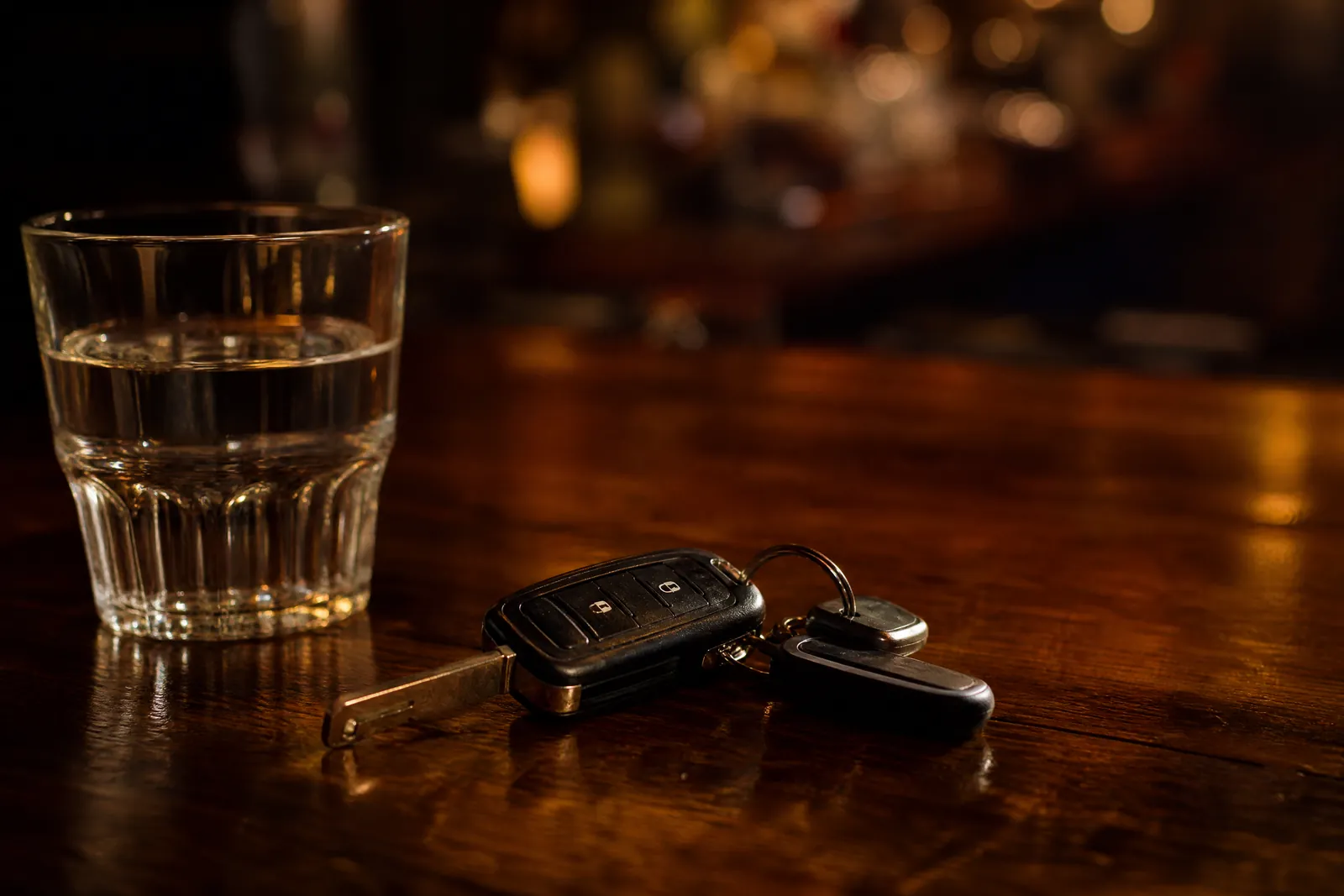
DUI basics
- In California, the DUI laws cover both alcohol and drugs.
- Driving while impaired by alcohol or by any drug that reduces your ability to drive safely is against the law.
- Your tolerance for alcohol goes down as you get older, which raises your risk of alcohol-related driving problems.
- At any age, driving after drinking too much alcohol in any form is illegal, and this includes alcohol in medicines such as cough syrup.
- At any age, it is illegal to drive after taking a drug that affects your driving, whether it is a prescription or an over-the-counter medicine.
- At any age, it is illegal to drive after using any mix of alcohol and drugs that lowers your ability to drive safely.
- You should read the labels on medicines and understand how any drug you take will affect you.
- The law treats illegal drugs and medicines from a doctor or pharmacy the same way, because any of them can hurt your ability to drive and react to what you see and hear.
Open container laws
- Any alcohol or cannabis carried in a vehicle must be in a container that is sealed and unopened.
- An opened container of alcohol or cannabis must be kept in the trunk or in an area where passengers do not sit.
- Keeping an open container of alcohol in the glove box is illegal.
- The open container rules do not apply to passengers in a bus, taxi, camper, or motorhome.
- It is against the law to consume alcohol, or to smoke or ingest cannabis, while operating a vehicle or traveling in one as a passenger.
BAC limits
- Blood Alcohol Concentration (BAC) is a measure of how much alcohol is in your bloodstream.
- If you are over 21, it is illegal to drive with a BAC of 0.08% or higher.
- An officer can charge you with DUI if you drive with a BAC over the legal limit.
- Having a BAC under the legal limit does not mean you are safe to drive, since almost everyone is affected by alcohol even below the limit.
- Depending on how impaired you are, you can be arrested and convicted of DUI even if your BAC was never measured.
- If you are under 21, it is illegal to drive with a BAC of 0.01% or higher.
- Drivers on DUI probation, at any age, may not drive with a BAC of 0.01% or higher.
- If you are driving a passenger for hire, it is illegal to drive with a BAC of 0.04% or higher.
- Estimated BAC depends on the number of drinks, gender, and body weight, and even a single drink can affect your ability to drive safely.
- Anyone operating a vehicle that needs a commercial driver's license may not legally drive with a blood alcohol concentration of 0.04% or more.
DUI arrests
- By driving in California, you agree to take a breath, blood, or urine test if an officer suspects you of DUI.
- After a DUI arrest, California's Administrative Per Se law requires the DMV to suspend your driving privilege.
- You may ask for a DMV administrative hearing within 10 days of the date of your DUI arrest.
- If you refuse a required chemical test, the DMV will suspend or revoke your driving privilege.
- Agreeing to a preliminary alcohol screening (PAS) or breath test does not exempt you from also being required to give blood or urine to test for drugs.
- Upon a DUI arrest, the officer may confiscate your driver's license and issue you a temporary one that lasts 30 days.
DUI convictions
- A DUI conviction leads the DMV to suspend or revoke your driving privilege.
- If convicted of DUI, you must finish a DUI program.
- If convicted of DUI, you must pay any license reissue or restriction fees that apply.
- If convicted of DUI, you may have to put an ignition interlock device (IID) on your vehicle.
- A DUI conviction requires you to submit a California Insurance Proof Certificate (SR 22/SR 1P).
DUI penalties
- A DUI conviction can bring a jail sentence of up to six months.
- A DUI conviction may require you to pay a fine.
- Getting another DUI within that 10-year period may result in extra penalties from the court or DMV.
- After a DUI conviction, your vehicle may be impounded and you may have to pay a storage fee.
- Every DUI conviction stays on your driver's record for 10 years.
- Seriously injuring or killing someone while driving impaired by drugs or alcohol can expose you to civil lawsuits.
Under 21 alcohol
- Drivers under 21 face extra laws about having and drinking alcohol.
- If you are under 21, you may not carry alcohol in a vehicle unless someone 21 or older is with you.
- Exception: a driver under 21 who works for someone holding an off-site liquor sales license may carry alcoholic beverages in closed containers.
- If a driver under 21 is caught with alcohol in the vehicle, the vehicle can be impounded for up to 30 days.
- A driver under 21 caught with alcohol in the vehicle may be fined by the court and have their license suspended for one year.
- If you are under 21, caught with alcohol, and do not yet have a license, the court may ask the DMV to delay your first license for up to one year.
- If an officer suspects a driver under 21 of drinking, the officer can require a hand-held breath test, a PAS, or another chemical test.
- If a driver under 21 has a PAS result of 0.05% BAC or higher, the officer may require a breath or blood test.
- If a follow-up test shows a driver under 21 has a BAC of 0.05% or higher, they may be arrested for DUI and have their driving privilege suspended.
- When a driver under 21 carries alcohol with a person 21 or older present, the container must be full, sealed, and unopened; an opened one must go in the trunk or an area where passengers do not sit.
- A driver under 21 convicted of DUI with a BAC of 0.01% or higher may have their driving privilege revoked for one year and must finish a licensed DUI program.
Chemical test refusal
- An officer who believes you are driving under the influence may ask you to take a blood or urine test.
- Declining a blood or urine test when an officer asks for one leads the DMV to suspend or revoke your driving privilege for a year.
Boating under influence
- Drinking alcohol or taking drugs while operating a boat, jet ski, water skis, aquaplane, or similar vessel is illegal.
Bicycle DUI
- A person aged 13 to 20 who is found guilty of cycling while impaired by alcohol or drugs may have their driving privilege suspended or postponed for one year starting when they qualify to drive.
Restated from the California Driver's Handbook, Section 9. Read the official text.
Check yourself on this section
- After a DUI conviction, which document must you submit?
- Drinking alcohol while operating which of these is illegal?
- Can you be convicted of DUI if your BAC was never measured?
- Which of the following can lead to a DUI if it impairs your driving?
- If an officer takes your license after a DUI arrest, the temporary license you receive lasts:
- If a driver under 21 is caught with alcohol in the vehicle, the vehicle can be impounded for up to:
- After a DUI arrest, how long do you have to request a DMV administrative hearing?
- Which of these is required after a DUI conviction?
- Which consequence may follow a DUI conviction?
- A driver under 21 may carry alcohol in a vehicle when:
- A driver under 21 convicted of DUI with a BAC of 0.01% or higher may have their driving privilege revoked for:
- A 17-year-old is found guilty of riding a bicycle while impaired by alcohol. What may happen?